 https://auction.ridesafely.com/images/2024/02/copart-vs-iaai-vs-public-auctions-key-differences-banner.jpg
865
1440
RideSafely
/images/2025/01/ridesafely-logo.svg
RideSafely2026-02-19 11:30:442026-02-19 14:34:02Copart vs IAAI vs Public Auctions: Key Differences
https://auction.ridesafely.com/images/2024/02/copart-vs-iaai-vs-public-auctions-key-differences-banner.jpg
865
1440
RideSafely
/images/2025/01/ridesafely-logo.svg
RideSafely2026-02-19 11:30:442026-02-19 14:34:02Copart vs IAAI vs Public Auctions: Key DifferencesThe Rise of Online Auto Auctions
The 14-Million-Vehicle Opportunity
In 2024 alone, over 14.26 million vehicles were sold through online auctions in the U.S. That’s not a typo—it’s a booming marketplace brimming with opportunity. Whether you’re a weekend flipper or just trying to score your next daily driver at a discount, this ecosystem is where the deals are hiding.
Convenience Meets Competition
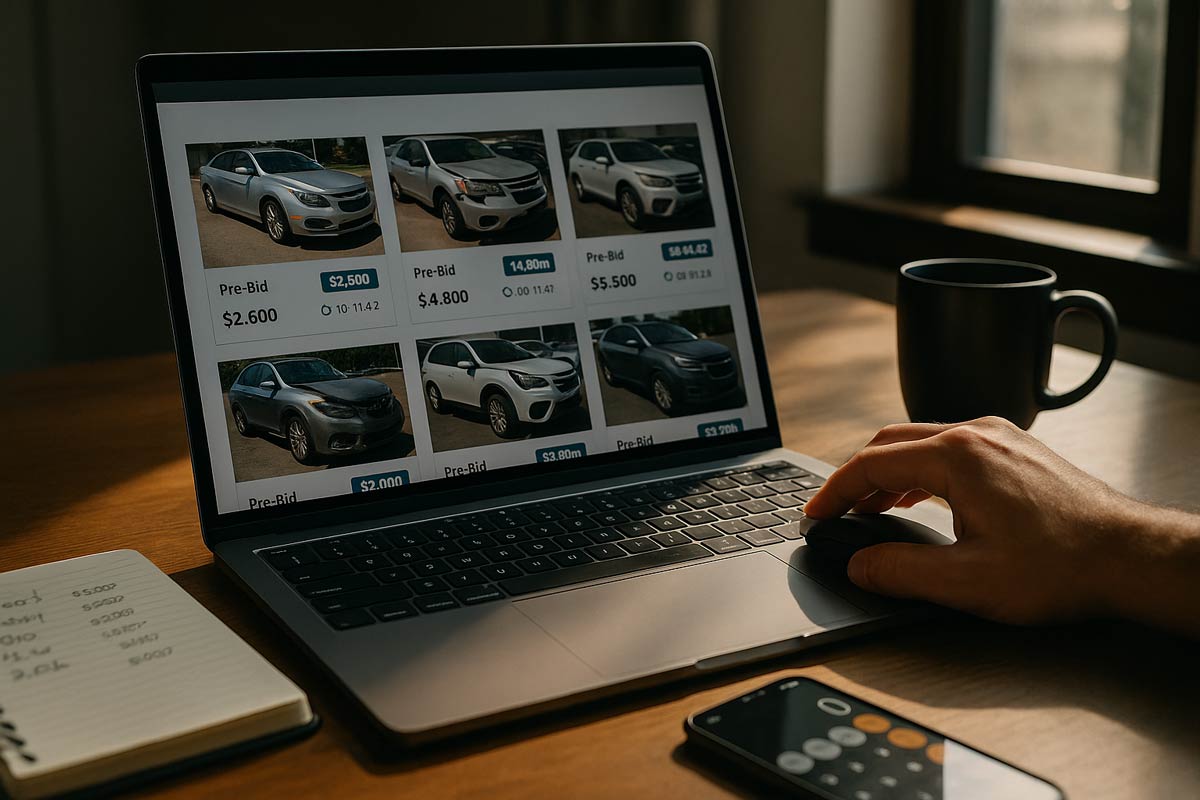
Online car auctions—like those on RideSafely—make it effortless to bid from your laptop, couch, or even phone. But that convenience? It’s a double-edged sword. You don’t get to kick the tires or take a quick spin. That’s why smart bidders know how to read between the lines—and the photos.
Know Your Numbers Before You Bid
Kelley Blue Book & Beyond
Before you even think about clicking “Bid Now,” check the fair market value. Sites like Kelley Blue Book (KBB) and NADA Guides are your best friends. You want at least a 20–30% margin between the market value and your target bid to cover repairs, fees, and profit.
Setting a Realistic Profit Margin
Say a used car is worth $10,000 retail. Your goal? Snag it for no more than $7,000—all-in, including auction fees and expected repairs. That buffer is your potential profit. If you’re flipping, the math needs to work before emotion enters the room.
Inspect Without Touching
Use Carfax and AutoCheck Effectively
Always, always run a vehicle history report. These tools spill the tea on:
- Accident records
- Title status (salvage, rebuilt, clean)
- Odometer readings
- Prior owners and use (personal vs fleet)
Read the Description Like a Detective
Auction listings are full of clues. Look for vague language (“vehicle may have additional hidden damages.”) and red flags like “frame damage reported.” If the seller won’t say what’s wrong, assume it’s worse than it looks.
Zoom into Photos for Hidden Clues
Blurry photos? Missing angles? Be cautious. When images are clear:
- Look at the body panel gaps
- Zoom in on rust spots or water lines
- Scan tires and brake rotors for uneven wear
Identify Cars That Buyers Actually Want
Local Demand vs National Inventory
The best flips? Vehicles are in short supply locally. Use Facebook Marketplace and Craigslist to see what’s hot in your zip code. You can also review recent top-selling vehicles on RideSafely to guide your picks.
Feature-Rich Trims and Unique Specs
Don’t just buy a base model Camry. Look for:
- Rare trims (e.g., Honda Civic Si, Toyota Tacoma TRD Pro)
- Sunroof + leather + nav? Jackpot.
- Color combos that pop (Red exterior, black interior)
Timing Is Your Silent Partner
Seasonal Patterns in Buyer Behavior
The best time to buy is often the worst time to sell:
- Winter: Great for scoring convertibles
- Summer: Time to hunt 4WD trucks
- Fall: Pickup trucks rise with hunting and hauling season
Auction Calendar Hacks
Some auctions have cycles. Near holidays? Fewer bidders. End of the month? Dealers are dumping inventory. Learn the rhythm, win the deal.
Understand Auction Psychology
How Others Overbid (and How You Avoid It)
Most bidders lose control when emotions take over. They see red, not ROI. To avoid overbidding at car auctions, keep your cool and stick to your pre-set maximum bid—no exceptions.
Learn the “Soft Close” Advantage
Many platforms use a soft close, meaning the auction timer extends with every last-second bid. Don’t get caught up in a bidding war—snipe instead.
Bid Like a Sniper, Not a Sprinter
Lurk. Watch. Strike in the last 20 seconds. It’s how pros avoid hyping the price and still walk away with the car.
Note: When you’re bidding, remember that your top bid should reflect your research and the potential profit margin. Consider brushing up on auction bidding strategies to sharpen your timing and technique.
Hidden Gems: Small Fixes, Big Profits
Cosmetic Damage = Opportunity
A dented fender or cracked bumper might scare off newbies—but if it’s an easy, affordable fix, that’s your golden goose. Learn how to restore salvage cars yourself and keep more of the profit.
Mileage Mind Games
A car with 102,000 miles can be $1,500 cheaper than one with 99,500. Buyers love round numbers, but mechanics love maintenance history. Play that gap.
Total Cost = Purchase + Reality Check
Don’t Forget Fees, Transport & Time
Break down your “real” cost:
- Auction fee: $300–$800
- Transport: $200–$1,000
- Title transfer & registration
- Your time: sourcing, listing, meeting buyers
Repair ROI Calculator
Estimate repair costs before bidding. Apps like RepairPal or calling a local mechanic help gauge if that cheap car is really a ticking money bomb.
Real Examples of Profitable Auction Wins
Case Study: 2015 Honda Accord Flip
- Purchase Price: $5,200
- Repairs: $400 (new tires + brake pads)
- Total Cost: $5,900
- Sold: $8,200
- Profit: $2,300
Case Study: Salvage SUV Turnaround
- 2017 Jeep Grand Cherokee
- Salvage title, minor front-end damage
- Total investment: $7,600
- Sold locally for $10,800
- Profit: $3,200
Auction Platforms to Trust
Why RideSafely Stands Out
RideSafely gives you:
- Access to dealer-grade inventory
- Transparent pricing and fees
- No dealer license required
- Pre-bid options to secure your spot
- The Season Auction team is always here to help.
Navigating Platforms Without a Dealer License
Online car auctions like RideSafely, IAA, and Copart (through brokers) let everyday buyers purchase vehicles just like the pros—no dealer license or lot visits required.
Common Mistakes to Avoid
Falling for the “Shiny” Cars
Glossy photos hide dents. Be suspicious of listings with:
- No damage photos
- Missing engine bay shots
- “Mechanical damage” with no context
Overbidding Out of Emotion
If it hits your limit, walk away. There’s always another car. Let the rookies make the expensive mistakes.
Building Your Auction Strategy
Tools of the Trade
- VIN Decoders (free online)
- RepairPal for estimate checks
- Marketplaces for local comps
- Bid sniping browser plugins
Flipping vs Long-Term Use Strategy
Flippers need margin and speed. Buyers seeking long-term value may be willing to pay more for reliability. Know your goal before you play the game.
Conclusion
Spotting profitable cars in online auctions is a skill—and like all skills, it gets sharper with practice. You don’t need a dealer license or a garage full of tools to win. You need research, restraint, and a little risk tolerance.
Start small, stay smart, and always run the numbers. Before long, you’ll see patterns others miss and profits others dream about. Whether you’re flipping for cash or buying your next ride, the opportunity is right in front of you.
Frequently Asked Questions
How much starting capital do I need to begin flipping auction cars?
Start lean with $8k–$12k for a single clean-title commuter or light-cosmetic SUV, including fees, transport, and recon. Reinvest profits to scale.
Are salvage cars worth it for beginners?
Only if you have trusted repair resources and understand title/registration in your state. Otherwise, start with clean titles to learn the workflow.
What’s a safe maximum bid rule?
Back into it: Max Hammer = Target Resale − (All Costs except Hammer) − Desired Profit. Stick to that number during soft close cycles.
How fast should I expect to sell?
Well-priced, well-presented cars with service records typically move in 7–21 days. Overpriced vehicles linger and eat holding costs.
What recon gives the best ROI?
Detailing, headlight restoration, basic brakes/fluids, small dent removal, and quality photos. Small spend, big perceived value.
What People Are Saying

You might also like
https://auction.ridesafely.com/images/2024/02/copart-vs-iaai-vs-public-auctions-key-differences-banner.jpg
865
1440
RideSafely
/images/2025/01/ridesafely-logo.svg
RideSafely2026-02-19 11:30:442026-02-19 14:34:02Copart vs IAAI vs Public Auctions: Key Differences https://auction.ridesafely.com/images/2026/02/wholesale-vs-retail-pricing-auction-cars-banner.jpg
865
1440
RideSafely
/images/2025/01/ridesafely-logo.svg
RideSafely2026-02-12 15:01:162026-02-12 18:48:44Wholesale vs Retail Pricing: Auction Cars Explained
https://auction.ridesafely.com/images/2026/02/wholesale-vs-retail-pricing-auction-cars-banner.jpg
865
1440
RideSafely
/images/2025/01/ridesafely-logo.svg
RideSafely2026-02-12 15:01:162026-02-12 18:48:44Wholesale vs Retail Pricing: Auction Cars Explained https://auction.ridesafely.com/images/2026/02/frame-vs-cosmetic-damage-auction-banner.jpg
865
1440
RideSafely
/images/2025/01/ridesafely-logo.svg
RideSafely2026-02-05 12:35:002026-02-05 12:38:59Frame Damage vs Cosmetic Damage: What’s Safe to Buy at Auction
https://auction.ridesafely.com/images/2026/02/frame-vs-cosmetic-damage-auction-banner.jpg
865
1440
RideSafely
/images/2025/01/ridesafely-logo.svg
RideSafely2026-02-05 12:35:002026-02-05 12:38:59Frame Damage vs Cosmetic Damage: What’s Safe to Buy at Auction https://auction.ridesafely.com/images/2026/01/pre-bid-vs-live-bidding-auction-strategy-banner.jpg
865
1440
RideSafely
/images/2025/01/ridesafely-logo.svg
RideSafely2026-01-29 18:19:572026-02-03 19:32:43Pre-Bid vs Live Bidding: Which Strategy Wins More Auctions?
https://auction.ridesafely.com/images/2026/01/pre-bid-vs-live-bidding-auction-strategy-banner.jpg
865
1440
RideSafely
/images/2025/01/ridesafely-logo.svg
RideSafely2026-01-29 18:19:572026-02-03 19:32:43Pre-Bid vs Live Bidding: Which Strategy Wins More Auctions? https://auction.ridesafely.com/images/2026/01/sedan-vs-suv-banner.jpg
865
1440
RideSafely
/images/2025/01/ridesafely-logo.svg
RideSafely2026-01-22 09:48:242026-01-30 12:46:22Sedan vs SUV: Which Is Better for Your Needs?
https://auction.ridesafely.com/images/2026/01/sedan-vs-suv-banner.jpg
865
1440
RideSafely
/images/2025/01/ridesafely-logo.svg
RideSafely2026-01-22 09:48:242026-01-30 12:46:22Sedan vs SUV: Which Is Better for Your Needs?Your RideSafely Questions, Answered
From auction to driveway — we’ve got you covered.
Leave a Reply
Want to join the discussion?Feel free to contribute!