 https://auction.ridesafely.com/images/2026/10/dealer-only-car-auction-explained-banner.jpg
865
1440
RideSafely
/images/2025/01/ridesafely-logo.svg
RideSafely2026-10-13 13:22:432026-10-13 13:31:05What Does “Dealer Only” Mean at a Car Auction?
https://auction.ridesafely.com/images/2026/10/dealer-only-car-auction-explained-banner.jpg
865
1440
RideSafely
/images/2025/01/ridesafely-logo.svg
RideSafely2026-10-13 13:22:432026-10-13 13:31:05What Does “Dealer Only” Mean at a Car Auction?If you’ve ever browsed car auctions online, you’ve probably seen listings labeled “frame damage,” “structural damage,” “minor dents and scratches,” or “cosmetic damage only.” The prices might look tempting, but here’s the big question: what’s actually safe to buy, and what’s a hidden money pit?
Let’s break it down in plain English so you can bid with confidence instead of guessing and hoping.
Understanding Auction Vehicles and Damage Labels
Why are so many auction cars have damage notes?
Most auction cars aren’t there by accident. They might be:
- Insurance total-loss vehicles
- Lease returns or repossessions
- Fleet vehicles with wear and tear
- Dealer trade-ins that are too rough or risky for retail lots
To protect themselves, auction houses flag visible and reported damage so buyers can’t claim they were “surprised” later. But those labels aren’t always complete, and they’re rarely detailed. Many auction vehicles come from insurance total losses, repossessions, or trade-ins that dealers choose not to retail, often resulting in branded titles due to common salvage title reasons.
Basic damage categories you’ll see in listings
Common phrases include:
- Frame / Structural Damage
- Front / Rear / Side impact
- Hail damage
- Vandalism
- Mechanical damage
- Minor dents and scratches
- Cosmetic damage only
The problem? Some of these sound scarier than they are, and others sound harmless when they absolutely are not.
Why “safe to buy” doesn’t always equal “cheap to fix”
You might see a car that is 100% safe to drive after repairs… but the cost of those repairs could completely erase any savings you thought you were getting. On the flip side, a car with ugly cosmetic damage might look bad in photos, but could be a fantastic, low-risk deal if the structure and mechanicals are solid.
What Is Frame Damage?
How a vehicle’s structural frame works
Think of the frame as the car’s skeleton. It keeps everything:
- Straight
- Aligned
- Able to absorb and distribute impact in a crash
Modern cars use unibody construction meaning the body and frame are integrated into one main structure. Some trucks and SUVs still use body-on-frame, where a separate frame supports the body.
If that underlying structure bends, twists, cracks, or is cut and badly welded, you’re dealing with frame damage.
Types of frame damage (unibody vs body-on-frame)
- Unibody vehicles:
- Damage to pillars, rails, rockers, aprons, or core supports can be considered structural. Even if panels look okay, the underlying structure may be off.
- Body-on-frame vehicles:
- If the frame rails, crossmembers, or mounting points are bent, rusted through, or patched poorly, the entire vehicle’s geometry changes.
Common causes of frame damage at auction
Collisions
The most obvious source. A hard hit to the front, rear, or side can:
- Bend frame rails
- Push suspension pickup points out of position.
- Distort the cabin structure.
Even if the car was “repaired,” a cheap fix may only address appearance, not structural integrity.
Floods and rust
In some regions, rust eats away at frames, subframes, and structural rocker panels. Severe rot can be just as dangerous as a bent rail because the metal won’t hold in an impact.
Flood cars, especially saltwater-exposed ones, can start rusting from the inside out, making structural parts weak over time.
Previous poor-quality repairs
Cars get hit, “fixed,” and then sold again. If a shop cuts corners by:
- Pulling the frame without proper measurements
- Welding patches over damage
- Filling structural areas with body filler
…you end up with a car that might drive “okay” today but will perform poorly in an accident or even normal driving.
Risks of Buying a Car with Frame Damage
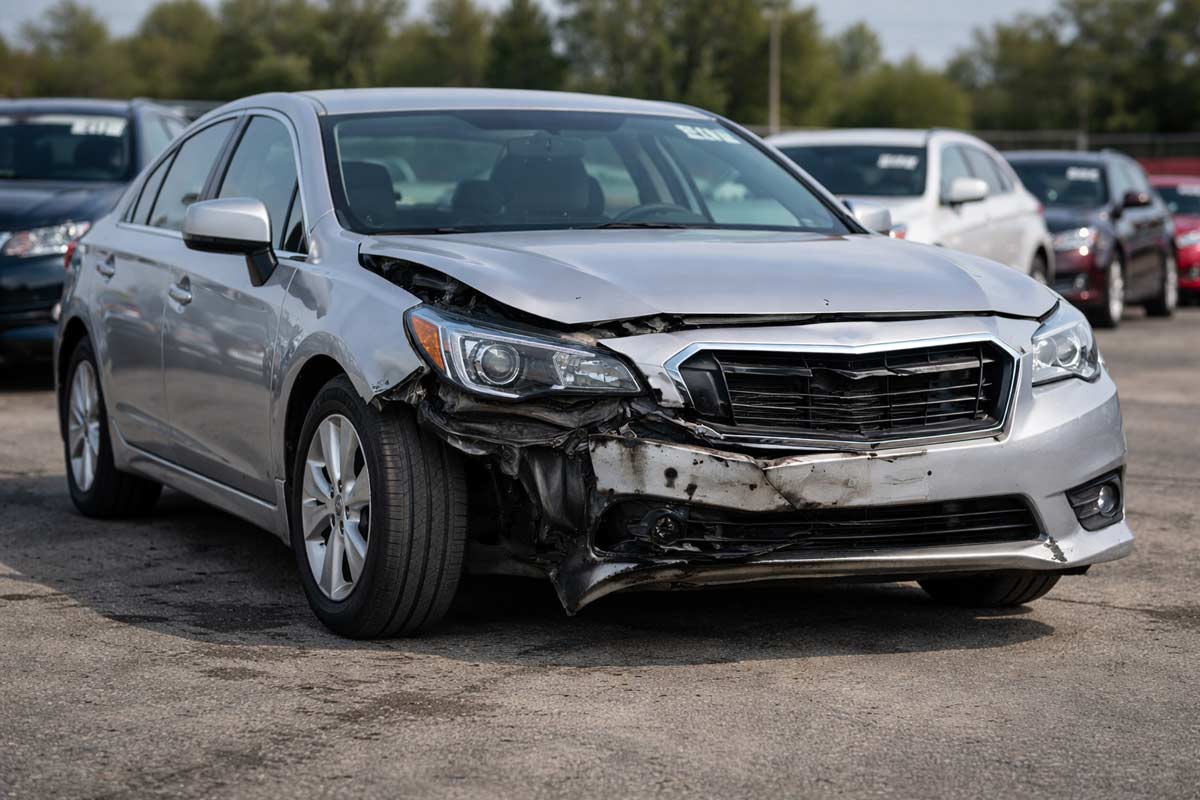
Safety implications in another crash
Modern safety systems depend on the structure being straight and predictable:
- Crumple zones must deform in a specific way
- Airbags deploy based on sensor data and deceleration patterns
If the frame is compromised, the car might not protect you as designed. That’s the biggest reason most casual buyers should treat severe frame damage as a hard no.
Alignment, handling, and tire wear issues
Even if the car feels “mostly fine,” frame damage can lead to:
- Constant alignment problems
- Steering that pulls or wanders
- Uneven tire wear
- Suspension parts are failing early
You might end up chasing problems with new tires and alignments over and over, never fully solving them because the structure is off.
Insurance, resale value, and total loss history
A car with documented frame damage or a structural total-loss history:
- It can be harder and more expensive to insure
- Often has a salvage or rebuilt title
- Loses a huge chunk of resale value
Even if you fix it well, many buyers will walk away the moment they hear the words “frame damage.”
When frame damage might still be considered (advanced buyers only)
There are edge cases where frame-damaged cars can make sense:
- Track-only cars
- Off-road builds
- Parts donors
But those are niche scenarios. If you’re buying your daily driver or a car for family use, structural damage usually isn’t worth the gamble.
Not all salvage vehicles were totaled due to severe crashes, and in many cases, titles are branded for reasons beyond accidents, including theft recovery or repair cost thresholds.
What Is Cosmetic Damage?
Typical cosmetic damage types
Cosmetic issues affect how the car looks, not its ability to drive or protect you (assuming there’s no hidden structural issue).
Scratches, dents, dings, and faded paint
- Key marks, parking lot dings
- Oxidized clear coat
- Small hail dents
Stuff that body shops deal with every single day.
Bumpers, headlights, and trim pieces
Plastic bumpers crack, fog lights break, grills get chipped. These parts bolt on and off, making them relatively straightforward to replace.
Interior wear and tear
- Torn seats
- Worn steering wheels
- Broken interior trim
These are cosmetic from a safety perspective, but still matter for comfort and resale.
When “cosmetic” can hide structural issues
Here’s the trap: a listing might say “cosmetic damage” because that’s what is visible in photos. But behind that:
- A pushed-in bumper could mean a bent crash bar or rail
- A misaligned hood might signal a twisted front end
- Uneven panel gaps can hint at previous structural repair
So, cosmetic damage is safer only when you’re confident that it’s truly cosmetic.
Frame Damage vs Cosmetic Damage: Key Differences
Safety impact
- Frame damage:
- Directly affects crash performance and structural integrity.
- Cosmetic damage:
- Mostly affects appearance. Safety is unchanged if the underlying structure is fine.
Repair complexity and cost
- Frame repairs:
- Require specialized equipment, measurements, and skilled technicians. Costs can skyrocket, especially if multiple areas are affected.
- Cosmetic repairs:
- It can often be handled by standard body shops, PDR (paintless dent repair), or DIY if you’re handy.
Impact on title status and history reports
- Frame damage and severe accidents are more likely to result in:
- Salvage / rebuilt titles
- Branded history on reports like Carfax or AutoCheck
- Cosmetic-only issues rarely change title status, though accident reports may still appear.
How each affects long-term ownership
- A car with solid structure and ugly paint can be a smart long-term keeper.
- A shiny car with hidden frame issues can become a bottomless pit of problems.
How Auctions Describe Damage
Common auction damage codes and notes
You might see shorthand like:
- “FRONT END”
- “REAR END”
- “ALL OVER”
- “SIDE”
- “HAIL”
- “MECHANICAL”
- “FRAME” or “STRUCTURAL”
These are quick tags, not full inspection reports. Never assume they tell the full story.
“As-is, where-is” – what that really means
Auctions almost always sell cars as-is:
- No warranty
- No guarantee of completeness
- No promise that unseen damage isn’t there
If you missed something in the photos or description, it’s still your problem after you win the bid.
Photos vs reality: what you can and can’t see online
Photos are incredibly helpful, but they:
- Don’t always show the car from low angles
- Don’t reveal hidden rust or underbody damage
- May hide small misalignments that matter a lot
Treat photos as a starting point, not the final verdict.
How to Spot Likely Frame Damage from Photos
Panel gaps and misalignment
Zoom in and look closely:
- Are the gaps around the hood, trunk, and doors even?
- Do doors sit too high or too low?
- Is one headlight closer to the bumper than the other?
Uneven gaps often suggest prior heavy impact or poor repair.
Uneven ride height and stance
If one corner sits lower or the car seems twisted:
- The frame, subframe, or suspension mounting points may be compromised
- Bent components could indicate a harder hit than the listing suggests
Signs of previous repairs (overspray, welds, ripples)
Look for:
- Slight waves in panels that should be straight
- Paint overspray on rubber seals or trim
- Different paint shades from one panel to another
These clues suggest past repairs. Good repairs aren’t automatically bad, but rushed ones usually mean more hidden issues.
Wheel and suspension clues
- Wheels that don’t sit centered in the wheel wells
- Obvious camber issues (tilted wheels)
- One wheel is pushed forward or backward relative to the other side
These are strong indicators that something structural may be off.
How to Evaluate Cosmetic Damage at Auction
Prioritizing damage that’s cheap to fix
Safer cosmetic buys often have:
- Light hail damage
- Minor dents with intact paint (ideal for PDR)
- Faded clear coat on roofs or hoods
- Worn interiors you can refresh over time
These are predictable and relatively low-risk.
Damage that looks small but costs big
Watch out for:
- Deep creases in body lines
- Damage to aluminum panels (harder to repair)
- Broken headlights on newer cars (often very expensive)
- Modern bumpers are packed with sensors and cameras
Small-looking scrapes can still mean a large repair bill on high-tech vehicles.
Using estimates and parts pricing to avoid surprises
Before bidding, it helps to:
- Price out bumper covers, headlights, grilles, and mirrors
- Get ballpark paint quotes for affected panels
- Add a buffer (because something always comes up)
If your max bid + estimated repairs + auction and transport fees starts to approach full retail value for a clean car… the “deal” isn’t a deal anymore.
When Is It Safe to Buy a Car with Cosmetic Damage?
Ideal cosmetic-only cars for beginners
You’re usually safer with:
- Lightly damaged daily drivers with clean titles
- Older vehicles with faded paint but solid maintenance history
- Cars with minor dings and interior wear, rather than structural hits
These give you the chance to save money without compromising safety.
Budgeting correctly: purchase price + repairs + fees
Always add:
- Hammer price (what you pay at auction)
- Buyer fees, documentation, and any add-ons
- Transport/shipping costs
- Repair and parts costs
- Registration, taxes, and inspection fees in your state
Then compare that total to the market price for a similar, undamaged car.
Red flags even in “cosmetic” cars
Be cautious if you see:
- Multiple damaged panels on the same corner
- Airbags deployed in the photos (this often means a harder hit)
- Hood gaps or crooked bumpers near “cosmetic” damage
At that point, it might not be purely cosmetic anymore.
When (If Ever) Is Frame Damage Worth the Risk?
Professional flippers and body shops vs casual buyers
If you:
- Own or work with a professional body shop
- Have access to frame machines and OEM specs
- Understand structural repairs deeply
…then a structurally damaged car might still be profitable as a project.
If not, you’re usually rolling the dice with your wallet and your safety.
Track cars, parts cars, and off-road builds
Frame-damaged cars can be:
- Parts donors (engine, transmission, interior, electronics)
- Dedicated track or drift cars, where safety rules and cages change the equation
- Off-road rigs, where some structural compromises are reinforced or repurposed
Even then, only experienced builders should play at this level.
Non-negotiable checks before bidding
If you’re even considering a structurally flagged car:
- Get as many photos as possible (especially underbody)
- Review any available reports thoroughly
- Assume the worst and bid as if repairs will be extensive
If that still makes sense and you know what you’re doing, proceed. Otherwise, walk away. In some cases, structurally compromised vehicles may still make sense as project cars, particularly for experienced builders planning restorations or custom builds.
Practical Checklist Before You Place a Bid
Documents and reports to review
- Vehicle history report (accidents, title brands, prior total losses)
- Odometer readings and service records, if available
- Photos of all sides, close-ups of damage areas
Visual checks you can do from photos
- Panel gaps and alignment
- Stance and wheel position
- Airbag deployment indicators (open steering wheel, deployed side curtains)
- Undercarriage shots, if provided
Questions to ask or research to do beforehand
Even if you can’t talk directly to the seller (common with big auctions), you can research:
- Typical repair costs for that specific make/model
- How the model holds value with accident history
- Known rust or structural weak points for that generation
Bidding Strategy for Damaged Auction Cars
Setting a maximum bid that actually makes sense
Work backward:
- Look up the market value for the same car in clean condition.
- Subtract your realistic repair costs and fees.
- Leave room for a profit margin or savings you’re happy with.
That number is your maximum. Don’t exceed it because of emotion or competition.
Don’t forget fees, transport, and repair delays
Time is a cost too:
- You may have weeks or months before the car is fully usable.
- Parts can be delayed or back-ordered.
- Shops may be booked out.
Cheap up front doesn’t always mean cheap overall.
Knowing when to walk away
The best buyers are great at saying “no.” If:
- Frame damage questions remain unanswered
- Photos look off, but you can’t pinpoint why
- Total costs creep too close to clean retail value
Walk away. There will always be another auction and another car.
Today, buyers can gain auction access online without holding a dealer license, making it easier than ever for individuals to participate from anywhere.
Real-World Examples: Safe vs Risky Auction Buys
Example 1 – Cosmetic-only damage that made sense
Picture this:
A sedan with:
- Hail dents on the roof and hood
- Clean title
- No structural or airbag deployment notes
You get quotes for PDR and paint where needed, add fees and transport, and still come out well below the cost of a similar undamaged car. That’s a classic cosmetic win.
Example 2 – “Minor” damage that hid frame issues
Now imagine an SUV with:
- “Front-end damage” listed
- One headlight pushed in
- Slightly crooked hood
The photos looked “not too bad,” but the crash pushed the frame rail back. Once on a frame machine, you find out:
- Rail and apron replacement is needed
- Suspension components are bent
- Airbag system needs work
Repair costs end up exceeding what a clean, undamaged SUV would have cost in the first place. That’s the nightmare scenario.
Lessons learned and how to apply them
- Don’t underestimate small but sharp hits to corners or front ends.
- Treat structural or airbag clues as serious warnings.
- Favor boring but honest cosmetic damage over anything that hints at frame involvement.
Cosmetic-only damage often creates opportunities for unexpected luxury finds, especially when high-end vehicles suffer minor exterior issues rather than structural damage.
Conclusion
Frame damage vs cosmetic damage isn’t just a technical distinction – it’s the line between smart risk and potential disaster at auction.
If you remember only a few things, make it these:
- Frame / structural damage is almost always a no-go for casual buyers. It affects safety, alignment, resale, and insurance.
- Cosmetic damage can be your friend, as long as you’re sure it’s truly cosmetic and you budget repairs realistically.
- Always calculate total cost: auction price + fees + transport + repairs + time.
- Trust your eyes and your math, not just the listing description.
Do that, and you’ll avoid the worst surprises and give yourself a real shot at landing a safe, solid deal at auction.
Ever in doubt? Reach out to the RideSafely seasoned team for support and professional advice trusted by thousands of auction buyers worldwide.
Frequently Asked Questions
Is it ever safe to drive a car that’s had frame damage repaired?
It can be, but only if the repairs were done correctly with proper measurements, equipment, and parts. The problem at auction is that you usually don’t know who did the work or how well. Unless you can verify high-quality structural repairs, it’s safer to avoid frame-damaged cars as a regular buyer.
Does cosmetic damage affect insurance rates?
Minor cosmetic damage alone usually doesn’t drastically change your insurance rate, but a history of accidents might. If the car has been in multiple incidents, even “cosmetic,” insurers may see it as higher risk. Always check the history report and talk to your insurer if you’re unsure.
How can I tell from photos if damage is more than cosmetic?
Look for clues like crooked panel gaps, misaligned bumpers, uneven stance, wheels that don’t sit right in the wheel wells, or signs of airbag deployment. These often indicate a stronger hit that may have affected structural components, even if the listing calls it “cosmetic.”
Are salvage title cars always frame damaged?
No. Some salvage cars are declared total losses due to theft, flood, or heavy cosmetic damage where repair costs exceed the car’s value. But many salvage vehicles do have structural or airbag-related damage in their history. Treat salvage titles as a signal to investigate deeply, not an automatic yes or no.
What kind of auction car is best for a first-time buyer?
For your first auction experience, look for:
- Clean or rebuilt titles with no structural or airbag notes
- Obvious, light cosmetic damage
- Solid maintenance history if available
- Common models with affordable parts
Avoid anything with frame, structural, or severe collision notes until you’ve built more experience and relationships with trusted repair shops.
What People Are Saying

You might also like
https://auction.ridesafely.com/images/2026/10/dealer-only-car-auction-explained-banner.jpg
865
1440
RideSafely
/images/2025/01/ridesafely-logo.svg
RideSafely2026-10-13 13:22:432026-10-13 13:31:05What Does “Dealer Only” Mean at a Car Auction? https://auction.ridesafely.com/images/2026/10/actual-vs-not-actual-mileage-banner.jpg
865
1440
RideSafely
/images/2025/01/ridesafely-logo.svg
RideSafely2026-10-06 14:31:302026-10-13 13:22:41Actual Mileage vs Not Actual Mileage at Car Auctions
https://auction.ridesafely.com/images/2026/10/actual-vs-not-actual-mileage-banner.jpg
865
1440
RideSafely
/images/2025/01/ridesafely-logo.svg
RideSafely2026-10-06 14:31:302026-10-13 13:22:41Actual Mileage vs Not Actual Mileage at Car Auctions https://auction.ridesafely.com/images/2026/09/auction-car-with-no-keys-buyer-guide-banner.jpg
865
1440
RideSafely
/images/2025/01/ridesafely-logo.svg
RideSafely2026-09-29 12:05:282026-10-06 13:50:49Auction Cars With No Keys What to Know Before You Bid
https://auction.ridesafely.com/images/2026/09/auction-car-with-no-keys-buyer-guide-banner.jpg
865
1440
RideSafely
/images/2025/01/ridesafely-logo.svg
RideSafely2026-09-29 12:05:282026-10-06 13:50:49Auction Cars With No Keys What to Know Before You Bid https://auction.ridesafely.com/images/2026/09/parts-only-salvage-auction-guide-banner.jpg
865
1440
RideSafely
/images/2025/01/ridesafely-logo.svg
RideSafely2026-09-22 12:45:062026-09-22 13:35:34What Does Parts Only Mean at a Salvage Auction?
https://auction.ridesafely.com/images/2026/09/parts-only-salvage-auction-guide-banner.jpg
865
1440
RideSafely
/images/2025/01/ridesafely-logo.svg
RideSafely2026-09-22 12:45:062026-09-22 13:35:34What Does Parts Only Mean at a Salvage Auction? https://auction.ridesafely.com/images/2027/07/auction-damage-codes-banner.jpg
865
1440
RideSafely
/images/2025/01/ridesafely-logo.svg
RideSafely2026-09-15 10:49:542026-09-15 13:09:23How to Decode Auction Damage Codes
https://auction.ridesafely.com/images/2027/07/auction-damage-codes-banner.jpg
865
1440
RideSafely
/images/2025/01/ridesafely-logo.svg
RideSafely2026-09-15 10:49:542026-09-15 13:09:23How to Decode Auction Damage CodesYour RideSafely Questions, Answered
From auction to driveway — we’ve got you covered.
Leave a Reply
Want to join the discussion?Feel free to contribute!