 https://auction.ridesafely.com/images/2026/09/parts-only-salvage-auction-guide-banner.jpg
865
1440
RideSafely
/images/2025/01/ridesafely-logo.svg
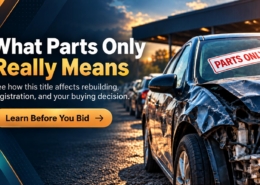
RideSafely2026-09-22 12:45:062026-09-22 13:35:34What Does Parts Only Mean at a Salvage Auction?
https://auction.ridesafely.com/images/2026/09/parts-only-salvage-auction-guide-banner.jpg
865
1440
RideSafely
/images/2025/01/ridesafely-logo.svg
RideSafely2026-09-22 12:45:062026-09-22 13:35:34What Does Parts Only Mean at a Salvage Auction?In an era where savvy shopping is the norm, Millennials, among others, are increasingly considering salvage title vehicles as a budget-friendly alternative in their automotive pursuits. The allure of a good deal blended with potential long-term value is reshaping the traditional car buying experience, prompting buyers to explore beyond superficial aesthetics and delve into the realm of salvage vehicles.

What Defines a Salvage Title Vehicle?
Salvage title vehicles are marked by significant damage, theft, or a total loss declaration from an insurance company. Often, insurance companies buy these vehicles from the original owners and then auction them. To access Insurance Auto Auctions, Copart Auto Auctions, and other similar auctions, a valid U.S. auto dealer’s license is required to purchase vehicles from insurance auctions. Now, however, RideSafely.com allows you to bid on thousands of salvage vehicles online. This change in ownership offers potential buyers the chance to own a vehicle at a fraction of the cost through services like RideSafely, which provides access to a wide array of salvage title vehicles online without the need for a U.S. auto dealer’s license.
Navigating Damage Types in Salvage Vehicles
Understanding the spectrum of damage that can lead to a salvage title is crucial for any prospective buyer. Here’s an insight into the various damage categories that salvage vehicles may embody:
Biohazard Damage
This indicates that the car has been contaminated with blood, bodily fluids, or mold. Biohazard status can result from suicide, homicide, childbirth, or flooding. Additionally, severe cluttering with biohazards, such as animal waste or bodily fluids, can also lead to a biohazard car title.
Biohazard vehicles can be cleaned and disinfected; they don’t always have to be scrapped. Cleaning these cars often requires removing porous materials to make sure any remaining bodily fluids are thoroughly disinfected.
Please review the information provided about biohazards, which you may find useful.
Biohazard:
Vandalism
Vandalism-induced damage primarily affects the aesthetics of a vehicle. Cars with salvage titles due to vandalism might have sustained extensive cosmetic damage, making repairs costlier than the vehicle’s value. However, the mechanical integrity is often unimpacted, which may appeal to those looking to invest in repairs.
Flood Damage
This type of damage occurs when a vehicle is submerged in water, often resulting from severe weather conditions or flooding. Flood-damaged vehicles are instantly branded with a salvage title due to the extensive and often unpredictable nature of water damage.
Hail Damage
Vehicles with hail damage typically exhibit numerous dents and damaged exteriors, including compromised windshields and lights. Despite these issues, the internal mechanics remain functional, presenting an opportunity for cosmetic refurbishment.
Theft Recovery
Salvage titles from theft vary by state; some states issue a salvage title regardless of the physical condition of the recovered vehicle, while others evaluate the extent of damage incurred during the theft. This category often includes vehicles that have minimal to no damage.
Non-Repairable Vehicles
These vehicles are deemed unfit for restoration and are restricted to being used for parts or scrap. Their lack of functional restoration potential is typically legislated by state laws.
Front and Back End Damage
Significant front or back end damage can lead to a vehicle being issued a salvage title. While front end damage may affect critical components like the engine, back end damage usually involves less crucial areas, making repairs simpler and less expensive.
Minor Dents and Scratches
Interestingly, vehicles with minor dents and scratches often retain a clean title, as the damage does not meet the threshold for a salvage designation. These vehicles are generally more aesthetically worn than mechanically deficient, making them ideal for buyers seeking minimal repairs.
Conclusion: A Smart Buyer’s Strategy
Navigating the salvage vehicle market requires a keen eye and an understanding of the types of damage that can affect a vehicle’s value and functionality. By recognizing the nuances of each damage type, buyers can make informed decisions that align with their automotive needs and budgetary constraints. Online auction services like RideSafely.com facilitate this process by providing transparent access to salvage vehicles, enabling buyers to thoroughly assess potential investments before making a purchase.
For additional insights into navigating auto auctions and understanding damage codes more thoroughly, don’t miss our article on Decoding Damage Codes: Essential Insights for Buying Cars at Auto Auctions.
Key Questions Answered: Understanding Salvage Title Vehicles
What is a salvage title?
A salvage title is issued to a vehicle that has been designated as a total loss by insurance companies due to significant damage, theft, or other extensive issues. It indicates that the vehicle has undergone substantial damage, usually costing more to repair than its actual market value.
Can a salvage title car be insured and driven?
Yes, a salvage title car can be insured and driven, but it must first be repaired and pass a state-mandated inspection to ensure it is roadworthy. Upon passing the inspection, it can be registered and insured, though the insurance rates may be higher than for a non-salvage vehicle.
Are salvage title vehicles worth buying?
Salvage title vehicles can be a good buy if you are looking for a lower-cost vehicle and are aware of the potential issues associated with them. They are often priced significantly below market value, but buyers should be prepared for possible extensive repairs and the challenges of insuring and reselling such vehicles.
How can I safely buy a salvage title vehicle?
To safely buy a salvage title vehicle, conduct thorough research on the vehicle’s history, inspect the car extensively (preferably with a certified mechanic), understand the extent of the damage, and ensure that you can handle the repairs. It’s also wise to check state laws regarding salvage vehicles as these can vary significantly.
What should I look for when inspecting a salvage title vehicle?
When inspecting a salvage title vehicle, look for the type and extent of the damage (whether structural, mechanical, or cosmetic). Check for signs of major repairs, ensure that critical systems like the engine and transmission are in good working order, and consider the overall cost of necessary repairs versus the vehicle’s value post-repair.
Can a salvage title be changed back to a clean title?
In most cases, a salvage title cannot be changed back to a clean title. However, once repaired and inspected, it can be rebranded as a “rebuilt” or “reconstructed” title, which allows it to be registered and driven but still indicates it was once a salvage vehicle.
What are the risks of buying a salvage title vehicle?
The risks include unforeseen extensive repairs, difficulties with insurance and financing, and potential safety issues if not properly repaired. The resale value of a salvage title vehicle is also generally lower, making it a less desirable option for future buyers.
What People Are Saying

You might also like
https://auction.ridesafely.com/images/2026/09/parts-only-salvage-auction-guide-banner.jpg
865
1440
RideSafely
/images/2025/01/ridesafely-logo.svg
RideSafely2026-09-22 12:45:062026-09-22 13:35:34What Does Parts Only Mean at a Salvage Auction? https://auction.ridesafely.com/images/2027/07/auction-damage-codes-banner.jpg
865
1440
RideSafely
/images/2025/01/ridesafely-logo.svg
RideSafely2026-09-15 10:49:542026-09-15 13:09:23How to Decode Auction Damage Codes
https://auction.ridesafely.com/images/2027/07/auction-damage-codes-banner.jpg
865
1440
RideSafely
/images/2025/01/ridesafely-logo.svg
RideSafely2026-09-15 10:49:542026-09-15 13:09:23How to Decode Auction Damage Codes https://auction.ridesafely.com/images/2026/09/popular-salvage-vehicles-by-category-banner.jpg
972
1619
RideSafely
/images/2025/01/ridesafely-logo.svg
RideSafely2026-09-08 11:58:462026-09-08 13:12:02The Most Popular Salvage Vehicles by Category
https://auction.ridesafely.com/images/2026/09/popular-salvage-vehicles-by-category-banner.jpg
972
1619
RideSafely
/images/2025/01/ridesafely-logo.svg
RideSafely2026-09-08 11:58:462026-09-08 13:12:02The Most Popular Salvage Vehicles by Category https://auction.ridesafely.com/images/2026/09/front-end-damage-cars-at-auction-worth-buying.jpg
865
1440
RideSafely
/images/2025/01/ridesafely-logo.svg
RideSafely2026-09-01 12:39:592026-09-01 13:10:42Front-End Damage Cars at Auction: Worth Buying?
https://auction.ridesafely.com/images/2026/09/front-end-damage-cars-at-auction-worth-buying.jpg
865
1440
RideSafely
/images/2025/01/ridesafely-logo.svg
RideSafely2026-09-01 12:39:592026-09-01 13:10:42Front-End Damage Cars at Auction: Worth Buying? https://auction.ridesafely.com/images/2026/08/rear-end-damage-cars-banner.jpg
865
1440
RideSafely
/images/2025/01/ridesafely-logo.svg
RideSafely2026-08-25 11:10:002026-08-25 13:29:41Rear-End Damage Cars: Easier to Repair Than You Think?
https://auction.ridesafely.com/images/2026/08/rear-end-damage-cars-banner.jpg
865
1440
RideSafely
/images/2025/01/ridesafely-logo.svg
RideSafely2026-08-25 11:10:002026-08-25 13:29:41Rear-End Damage Cars: Easier to Repair Than You Think?
Leave a Reply
Want to join the discussion?Feel free to contribute!