 https://auction.ridesafely.com/images/2026/10/dealer-only-car-auction-explained-banner.jpg
865
1440
RideSafely
/images/2025/01/ridesafely-logo.svg
RideSafely2026-10-13 13:22:432026-10-13 13:31:05What Does “Dealer Only” Mean at a Car Auction?
https://auction.ridesafely.com/images/2026/10/dealer-only-car-auction-explained-banner.jpg
865
1440
RideSafely
/images/2025/01/ridesafely-logo.svg
RideSafely2026-10-13 13:22:432026-10-13 13:31:05What Does “Dealer Only” Mean at a Car Auction?Have you ever dreamed of turning a rusty classic into your next garage trophy? You’re not alone. There’s something timeless about bringing vintage metal back to life, especially when you get your hands dirty and restore a car yourself. Whether you’re a seasoned gearhead or gearing up for your very first restoration, not all classics offer the same level of DIY friendliness.
The good news? Plenty of iconic, accessible, and genuinely fun classic cars can be restored right at home without draining your bank account or testing your patience.
You’ll find mostly American muscle cars on this list, specifically those from the 60s and 70s.
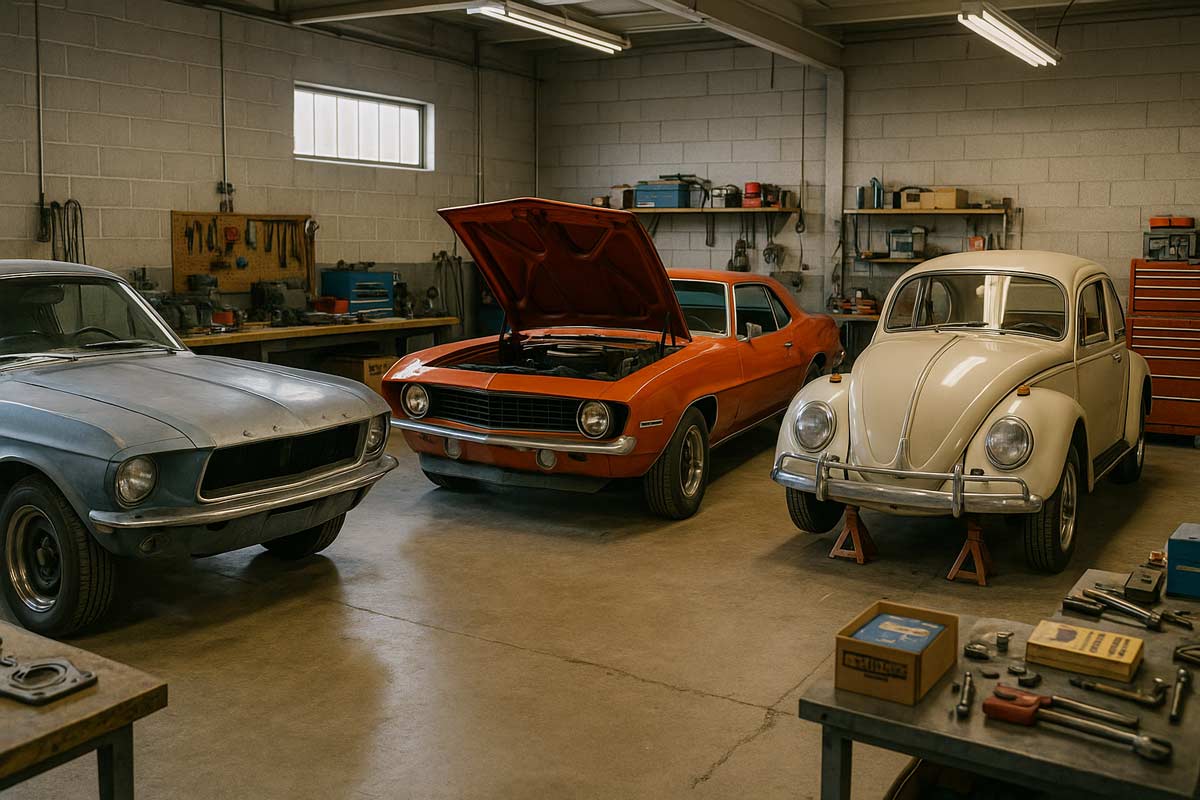
What Makes a Classic Car Ideal for DIY Restoration?
Not every classic is a good candidate for a home restoration. So what sets the best ones apart?
Availability of Parts
The more cars that were produced, and the larger their fanbase, the easier it is to find affordable replacement parts. That means less time scouring junkyards and more time wrenching.
Simplicity of Design
Forget about complex electronics and modern computers. Older classics were built with straightforward mechanics, making them a perfect classroom for aspiring home restorers.
Community and Resource Support
When a car has a loyal following, you’ll find forums, Facebook groups, YouTube channels, and repair guides to help you through every hiccup in the process.
American Muscle and Iconic Restorations
Let’s start with the cars that made America’s roads roar, and that are still top picks for anyone looking to restore a classic with their own hands.
1. Ford Mustang
Why the Mustang Tops the List
No classic car restoration list is complete without the Ford Mustang. It’s the people’s pony car for a reason. Millions were built, which means parts are everywhere and prices stay manageable.
Model Years to Target
First-gen Mustangs (1964.5–1973) are beloved by collectors, but 80’s Fox Body models are also gaining steam as fun, affordable projects.
2. Chevrolet Camaro
The Pony Car Rivalry
Chevy’s answer to the Mustang, the Camaro, offers a world of potential for DIY restoration. Late ‘60s and early ‘70s models are especially popular, but even later generations can be found at a bargain.
Tips for New Restorers
Start with a base model or a six-cylinder if you are on a budget, then build your dream muscle machine one weekend at a time.
3. Pontiac Firebird
From F-Body to Trans Am
Whether you crave the original Firebird style or have Smokey and the Bandit dreams of a Trans Am, the F-body platform is one of the most customizable and supported classic platforms out there.
Restoration Considerations
Earlier, less collectible models are often cheaper, making them ideal for first-time restorers who don’t want to over-invest.
4. Chevy Chevelle
The Ubiquitous SS
The Chevelle SS, especially from the late ‘60s and early ‘70s, is a staple at classic car shows. It’s stylish, powerful, and there’s an ocean of aftermarket parts.
Aftermarket Goldmine
Chevelle parts, especially for the small-block and big-block V8s, are abundant, making engine rebuilds straightforward even for beginners.
5. Oldsmobile Cutlass
Underrated and Affordable
Overshadowed by its 4-4-2 sibling, the Cutlass remains a solid, affordable entry into the world of classic car restoration. A-body GM platform means tons of shared components.
The 4-4-2 Mystique
If you can find a 4-4-2 (or turn a Cutlass into a clone), you’ll have a muscle legend in your garage.
6. Pontiac GTO
America’s First Muscle Car
The GTO’s reputation precedes it. These cars aren’t just fun to drive; they’re rewarding to restore thanks to solid community support.
Value for the Money
The 1970–71 models often deliver excellent value, offering plenty of power without the inflated prices seen in some earlier years. In fact, the 1970–71 models will get you the most bang for your buck compared to many of the more popular options.
7. Chevy El Camino
Unique Car-Truck Appeal
Part car, part truck, all attitude, the El Camino is as much a conversation starter as it is a project car.
What to Watch For
Early 70s models (especially SS variants) are most sought after, but be aware: exterior panels can be harder to track down than other Chevys. Engine and drivetrain parts, though, are plentiful.
Early American Simplicity
Sometimes, older really is better, especially for first-timers looking for a simple, honest project.
8. Ford Model A
The Original Hot Rod Platform
The Model A isn’t just a slice of American automotive history; it’s a playground for hot rod and rat rod builders. Its popularity keeps the parts supply strong nearly a century later.
Beginner-Friendly Builds
Open-wheel design and straightforward mechanics mean you can learn the ropes without wrestling complex bodywork or electronics.
Affordable Entry-Level Classics
Some classics offer an easy on-ramp for beginners without sacrificing style or nostalgia.
9. Chevy Nova
Small but Mighty
Don’t overlook the Nova. It’s lightweight, simple, and packs a punch with the right engine swap.
Cost-Effective Restorations
Novas tend to cost less to purchase and restore than bigger muscle cars. Chevy made millions, so parts are out there, waiting for your next order.
10. Mercury Cougar
The Mustang’s Under-the-Radar Cousin
The first-generation Cougar shares plenty with the Mustang under the skin, making it an underappreciated gem for budget-conscious restorers.
Parts Interchangeability
If you’re hunting for affordable Ford V8 power with a unique twist, the Cougar could be your best-kept secret. Mustang parts fit in plenty of places, so you won’t be stuck hunting unicorns.
Legendary Imports
It’s not all American muscle; some imports are perfect DIY projects too.
11. Volkswagen Beetle
Millions Built, Millions to Restore
If you want something quirky, fun, and truly global, the Beetle’s your bug. With production stretching from the late 1940s to the early 2000s, parts are everywhere.
The Joy of Simplicity
Easy to wrench on, ultra-simple engines, and a rabid worldwide fanbase make this an easy car to love.
12. MG MGB
British Style on a Budget
Looking for a little British flair? The MGB is a fantastic choice for new and seasoned hobbyists alike. Their rugged simplicity and fun handling keep people coming back.
Sourcing Overseas Parts
While parts may need to cross the Atlantic, they’re surprisingly affordable. You’ll also find a strong U.S. club scene to help you along the way.
13. Jeep CJ Series
The Original Off-Road Icon
Looking for a classic that is as at home in the dirt as it is at a car show? The Jeep CJ (Civilian Jeep) series, from the CJ-5 and CJ-7 to the earlier CJ-2A, offers one of the best entry points for DIY restorers who crave adventure. With production spanning from the 1940s through the 1980s, there is a huge selection of donor vehicles and parts.
Why the CJ Series Makes a Great Project
- Simplicity: The CJ’s utilitarian design means fewer electronics, straightforward engines, and basic suspension.
- Parts Availability: Massive aftermarket support—almost every nut and bolt can be bought new.
- Customization Potential: From wild off-roaders to pristine restorations, the sky’s the limit.
Restoration Highlights
- Rust-prone frames and bodies are easy to repair or even replace.
- Swapping in a modern drivetrain or updated brakes is popular and well documented by the Jeep community.
- Whether you want an all-original classic or a trail-tackling beast, the CJ is the ultimate blank canvas for any restorer.
The Jeep CJ is proof that restoration fun does not end with muscle cars or imports. Sometimes, the best projects are the ones that beg for mud, adventure, and a little bit of open-air freedom!
Getting Started with Your Classic Car Project
Before you buy, take a beat and plan your approach.
Assessing Your Skill Level and Tools
Are you comfortable with wrenches, sockets, and jacks? Do you have a safe, well-lit workspace? Start small and build your confidence as you go.
Setting a Realistic Budget
Restorations are famous for blowing budgets. Plan for parts, tools, unexpected repairs, and always add a cushion for surprises.
Finding the Right Project Car
Check online auctions, classified ads, and local car shows. RideSafely offers a wide range of damaged and clean title classics, perfect for restoration bargains.
Where to Find Parts and Support
No one restores a classic alone.
Online Marketplaces and Forums
eBay Motors, Craigslist, dedicated classic car parts sites, and Facebook Marketplace are your best friends for finding parts. Forums and online communities offer troubleshooting, camaraderie, and moral support.
Local Clubs and Events
Join a car club! There’s no better way to get hands-on advice and maybe even score a few parts at swap meets or club gatherings.
Final Tips for a Successful DIY Restoration
Patience and Perseverance
Restoring a classic is a marathon, not a sprint. Celebrate small victories and don’t get discouraged by setbacks.
Knowing When to Ask for Help
Even the best DIYers hit walls. Don’t be afraid to consult a pro for major jobs like paint or engine machining—sometimes, it’s the smartest investment.
Conclusion
Restoring a classic car is not just about the finished product; it is about the journey, the skills you learn, and the stories you collect along the way. With the right car, the right attitude, and a willingness to get your hands dirty, you can turn a forgotten classic into your next pride and joy. Whether it’s American muscle, an import icon, or a quirky hybrid, there’s a project car out there waiting for you.
So grab your wrenches, fire up your playlist, and get ready for the ride of your life. Who knows? Your garage could be the birthplace of the next classic legend.
Frequently Asked Questions
What is the cheapest classic car to restore for beginners?
The Chevy Nova and Ford Mustang are both affordable and supported by huge parts networks, making them ideal for first-time restorers.
How much should I budget for a DIY classic car restoration?
Costs vary, but expect to spend anywhere from $5,000 to $30,000 depending on the car’s condition, your goals, and how much work you do yourself.
Are imported classics like the Beetle or MGB hard to restore in the U.S.?
Not at all! Both have strong parts supply and fan communities, though MG MGB parts may take longer to arrive if ordered from overseas.
Can I restore a classic car if I have limited mechanical experience?
Absolutely. Start with a simpler car (like the Beetle or Model A), ask for help online or from local clubs, and tackle one project at a time.
What’s the best way to find a project car for restoration?
Check online auctions, local classifieds, Facebook Marketplace, enthusiast forums, and car shows. Platforms like RideSafely also offer affordable project cars with clean or damaged titles. Always research parts availability and inspect the vehicle before buying.
What People Are Saying

You might also like
https://auction.ridesafely.com/images/2026/10/dealer-only-car-auction-explained-banner.jpg
865
1440
RideSafely
/images/2025/01/ridesafely-logo.svg
RideSafely2026-10-13 13:22:432026-10-13 13:31:05What Does “Dealer Only” Mean at a Car Auction? https://auction.ridesafely.com/images/2026/10/actual-vs-not-actual-mileage-banner.jpg
865
1440
RideSafely
/images/2025/01/ridesafely-logo.svg
RideSafely2026-10-06 14:31:302026-10-13 13:22:41Actual Mileage vs Not Actual Mileage at Car Auctions
https://auction.ridesafely.com/images/2026/10/actual-vs-not-actual-mileage-banner.jpg
865
1440
RideSafely
/images/2025/01/ridesafely-logo.svg
RideSafely2026-10-06 14:31:302026-10-13 13:22:41Actual Mileage vs Not Actual Mileage at Car Auctions https://auction.ridesafely.com/images/2026/09/auction-car-with-no-keys-buyer-guide-banner.jpg
865
1440
RideSafely
/images/2025/01/ridesafely-logo.svg
RideSafely2026-09-29 12:05:282026-10-06 13:50:49Auction Cars With No Keys What to Know Before You Bid
https://auction.ridesafely.com/images/2026/09/auction-car-with-no-keys-buyer-guide-banner.jpg
865
1440
RideSafely
/images/2025/01/ridesafely-logo.svg
RideSafely2026-09-29 12:05:282026-10-06 13:50:49Auction Cars With No Keys What to Know Before You Bid https://auction.ridesafely.com/images/2026/09/parts-only-salvage-auction-guide-banner.jpg
865
1440
RideSafely
/images/2025/01/ridesafely-logo.svg
RideSafely2026-09-22 12:45:062026-09-22 13:35:34What Does Parts Only Mean at a Salvage Auction?
https://auction.ridesafely.com/images/2026/09/parts-only-salvage-auction-guide-banner.jpg
865
1440
RideSafely
/images/2025/01/ridesafely-logo.svg
RideSafely2026-09-22 12:45:062026-09-22 13:35:34What Does Parts Only Mean at a Salvage Auction? https://auction.ridesafely.com/images/2027/07/auction-damage-codes-banner.jpg
865
1440
RideSafely
/images/2025/01/ridesafely-logo.svg
RideSafely2026-09-15 10:49:542026-09-15 13:09:23How to Decode Auction Damage Codes
https://auction.ridesafely.com/images/2027/07/auction-damage-codes-banner.jpg
865
1440
RideSafely
/images/2025/01/ridesafely-logo.svg
RideSafely2026-09-15 10:49:542026-09-15 13:09:23How to Decode Auction Damage CodesYour RideSafely Questions, Answered
From auction to driveway — we’ve got you covered.
Leave a Reply
Want to join the discussion?Feel free to contribute!