 https://auction.ridesafely.com/images/2026/08/car-brands-hold-value-auction-banner.jpg
865
1440
RideSafely
/images/2025/01/ridesafely-logo.svg
RideSafely2026-08-11 13:12:512026-08-11 13:44:30Auction Price Trends: Which Car Brands Hold Value Best?
https://auction.ridesafely.com/images/2026/08/car-brands-hold-value-auction-banner.jpg
865
1440
RideSafely
/images/2025/01/ridesafely-logo.svg
RideSafely2026-08-11 13:12:512026-08-11 13:44:30Auction Price Trends: Which Car Brands Hold Value Best?When most people hear “salvage title,” they instantly picture a car that’s been ripped in half on the highway. In reality, a salvage title doesn’t always mean the car was in a dramatic crash. Sometimes it comes down to math, paperwork, or bad weather rather than a totaled wreck.
Let’s break down exactly why cars get salvage titles, and why that label doesn’t automatically make a vehicle junk.
Understanding What a Salvage Title Really Means
Basic definition of a salvage title
A salvage title is a special branding on a vehicle’s title that indicates it has been declared a total loss by an insurance company or deemed uneconomical to repair. It doesn’t necessarily mean the car is destroyed; it means the cost to bring it back to pre-loss condition is too high compared to its market value.
Think of it like this: if a car is worth $10,000 and the repair estimate is $8,500, the insurance company might decide it’s not worth fixing through the traditional route — and it becomes “salvage.”
Who decides when a car becomes salvage?
In most cases, the insurance company makes the call after a claim is filed and a damage estimate is completed. They compare:
- The actual cash value (ACV) of the car
- The estimated repair cost (including labor, parts, and sometimes rental coverage)
If that repair cost crosses a certain threshold defined by state law or internal company policy, the car is branded a total loss and usually issued a salvage title.
Who decides when a car becomes salvage?
It’s easy to mix up the terms, so here’s a quick snapshot:
- Salvage title – Vehicle was declared a total loss and is not yet legally roadworthy.
- Rebuilt (or reconstructed) title – A former salvage vehicle that has been repaired and passed state inspections, making it legal to drive again.
- Junk or non-repairable title – Vehicle is considered beyond repair and can only be used for parts or scrap, never registered again.
So, a salvage title is not the final chapter — it’s more like the “before” picture in a restoration story.
The Role of Insurance Companies in Salvage Titles
Total loss thresholds explained
Each state has its own total loss threshold, usually expressed as a percentage of the car’s value. For example:
- Some states might total a car when repair costs reach 70%–75% of its value.
- Others require damages to exceed 100% of its value (a “total loss formula” is used, combining repair costs plus salvage value).
Because of this, the same damage could mean “salvage” in one state and “repairable with a clean title” in another.
Why minor damage can still lead to a salvage title
Here’s the twist: it doesn’t always take dramatic damage to trigger a salvage title.
Situations where minor-seeming damage might still total a car:
- The vehicle is older or has low market value
- Labor rates are high in that area
- Parts are expensive or complicated to source
- Additional costs like rental coverage or storage fees push the total too high
So yes, a car with mostly cosmetic damage can still end up with “salvage” on its title.
How claim payouts influence title branding
When an insurer declares a total loss, they usually:
- Pay the policyholder the car’s ACV (minus deductibles).
- Take ownership of the vehicle.
- Send it to auction or salvage for resale, parts, or rebuilding.
At that point, the title is branded salvage to notify future buyers that the vehicle has a serious history and shouldn’t be treated the same as a never-damaged clean-title car.
Top Reason #1 – Collision Damage (Not Always Catastrophic)
Front-end and rear-end damage
Traditional collisions are still the most common reason for salvage titles. Front-end and rear-end impacts can damage:
- Bumpers, hood, trunk, and fenders
- Radiators and cooling systems
- Headlights, taillights, and sensors
Even when the frame is okay, the stacked cost of parts and labor can tip the scale.
When airbags deploy
Airbag deployment is a significant factor. Airbags are expensive to replace, and multiple deployed airbags often signal a higher-impact collision. Many insurers automatically move toward a total loss when:
- Multiple airbags deploy
- Seatbelt pretensioners fire
- Dashboard and steering wheel components are damaged
Again, it doesn’t always mean the car is unrepairable — just that it’s costly according to insurance math.
Frame vs cosmetic damage
A common misconception is that salvage always means frame damage. Not true.
- Some salvage cars have zero frame issues and mostly cosmetic problems: dents, scratched paint, cracked bumpers.
- Others may have structurally significant damage that truly affects safety and alignment.
That’s why inspections and history reports are so necessary when considering any salvage vehicle.
Top Reason #2 – Flood and Water Damage
Flood zones, hurricanes, and heavy storms
Cars caught in hurricanes, flash floods, or rising river waters frequently get branded as salvage. Water intrusion can affect:
- Interior carpets and seats
- Electrical systems and modules
- Engine and drivetrain components
If water reaches certain levels (like the dashboard or higher), insurers often default to a total loss.
Electrical and mold issues that scare insurers
The two biggest enemies in flood cars are electronics and mold:
- Modern vehicles are packed with sensors, wiring, and computers. Water can cause intermittent electrical problems that are hard to diagnose.
- Moisture trapped in the cabin leads to mold, odor, and health concerns that are expensive to remediate properly.
Instead of gambling on hidden damage, insurers often choose the “safe” route and total the car.
Difference between water exposure and true flood damage
Not every car that touched water is automatically a flood car. For example:
- A car splashed through a deep puddle and stalled is not the same as a car submerged in a flooded street.
- Some vehicles may have only minor water exposure (e.g., wet carpets) that can be professionally dried and cleaned.
However, when the damage is extensive enough to trigger a claim and total loss, that’s when “salvage” comes into play.
Top Reason #3 – Theft Recovery Vehicles
Why stolen and recovered cars end up with salvage titles
Here’s one of the most surprising reasons: theft.
If a car is stolen and not recovered for a long time, the insurance company may:
- Pay out the claim to the owner (treating it as a total loss).
- Later, if the car is found, it’s now technically the insurance company’s property.
At that point, the recovered vehicle often enters the salvage system and may receive a salvage title, even with little to no damage.
Minimal damage but still branded
Many theft recovery vehicles:
- Only have cosmetic issues (broken ignition, missing wheels, damaged locks)
- Are mechanically sound
- Look far better than typical crash vehicles
Yet they still may carry a salvage title because they’ve already been written off.
Common misconceptions about theft-recovered vehicles
People often assume “salvage = wreck,” but theft/recovery units break that stereotype. With proper inspection and documentation, they can be solid value buys for informed shoppers.
Top Reason #4 – Hail and Weather-Related Damage
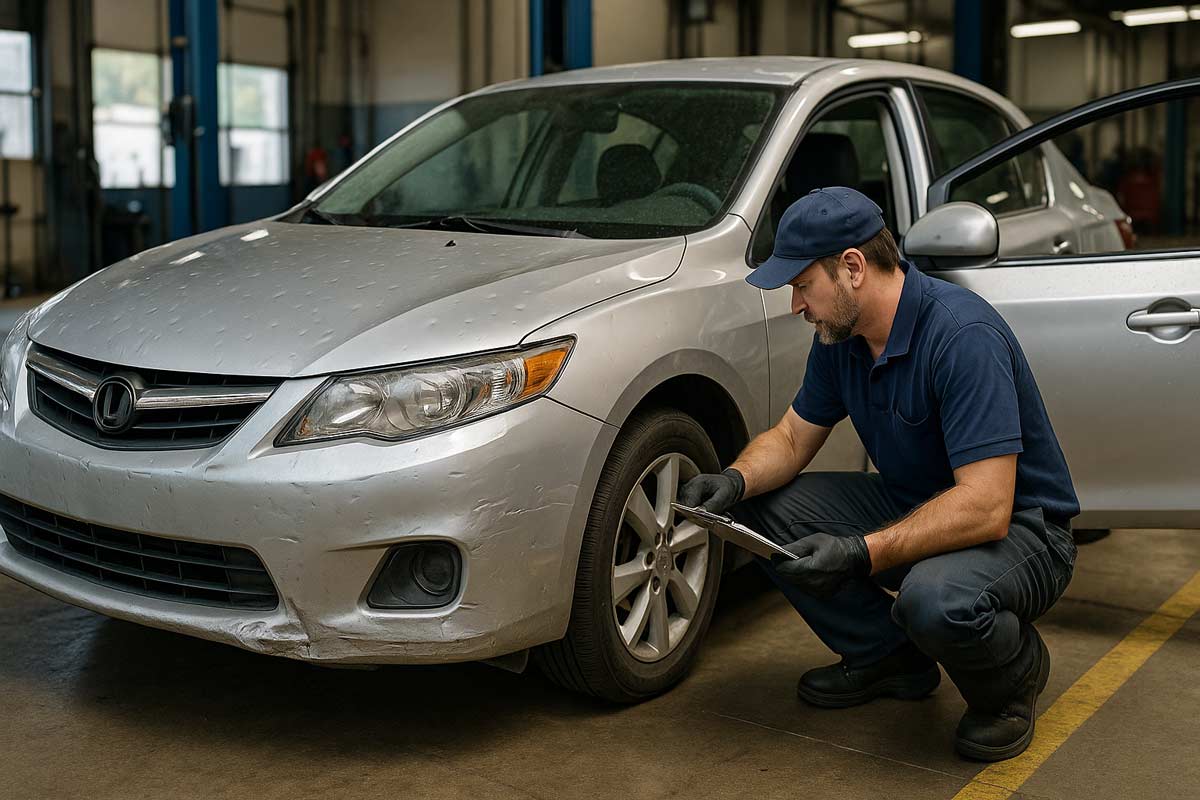
Hailstorms and roof/body panel damage
Hail can absolutely destroy the exterior of a vehicle:
- Dozens or hundreds of dents on the hood, roof, and trunk
- Shattered glass and cracked windshields
- Damaged mirrors, trim, and lights
Even though the car may drive perfectly, the repair bill for paintless dent repair and panel replacement can skyrocket.
Why cosmetic damage can total a car
If the car’s value is low to moderate, hail damage can surpass the total-loss threshold quickly:
- Replacing multiple body panels
- Repainting large surfaces
- Replacing glass and trim
The result? A salvage or rebuilt title on a car that, mechanically, might be excellent.
Hail-damaged cars as hidden value opportunities
For buyers who don’t care about a few dents, hail-damaged salvage cars can offer:
- Lower purchase prices
- Reliable performance if mechanicals are sound
- Potential for cosmetic improvement on a budget
Top Reason #5 – Vandalism and Intentional Damage
Keying, broken glass, slashed interiors
Vandalism can be brutal and expensive to fix:
- Deep scratches down the entire length of the car
- Broken windows and mirrors
- Slashed seats and damaged dashboards
- Spray paint and other intentional damage
Individually, these issues sound “cosmetic,” but together, the repair bill adds up fast.
Insurance cost vs car value math
If all that repair work approaches or exceeds the value of the car, the insurer totals it — and that means salvage title, even though the engine and transmission might be perfectly fine.
How vandalism claims lead to salvage titles
Once the claim is paid and the car is deemed uneconomical to restore to like-new condition, the path is the same:
- Insurance company takes ownership
- Title becomes salvage
- Vehicle is sold at auction for parts or rebuilding
Top Reason #6 – Non-Repairable or Junk Classifications
When the car is too far gone
Some damage really is extreme:
- Severe structural damage from major collisions
- Vehicles burned in fires
- Cars crushed or twisted in accidents
These may receive non-repairable or junk titles.
Parts-only or scrap value
With these titles:
- The car can only be sold for parts or scrap metal
- It cannot be legally registered for road use again
- The title permanently reflects its non-repairable status
Why some titles can never be rebuilt
States use these designations to protect public safety. If a vehicle is too compromised, they don’t want it returning to the road under any circumstances.
Top Reason #7 – Administrative, Documentation, and Title Issues
Missing titles and severe paperwork problems
Not every salvage story involves physical damage. Sometimes the issue is paperwork:
- Lost or missing titles
- Serious gaps in ownership documentation
- Legal disputes over ownership
Certain states may issue a branded or salvage-style title as a way to reintroduce such vehicles into the system, with a clear warning.
VIN tampering or inconsistencies
If a car has:
- Altered VIN plates
- Mismatching VINs across different parts of the car
- Records suggesting possible theft or fraud
Authorities may brand the title salvage or another warning status to signal that the car has a questionable history.
Errors, branding changes, and DMV corrections
Sometimes an error or an adjustment in previous title branding can lead to:
- A clean title becoming branded
- A branded title being updated to rebuilt after inspections
It’s another reason to always pull a vehicle history report instead of relying only on the piece of paper in front of you.
Top Reason #8 – Mechanical Failures and Engine/Transmission Issues
Blown engines or failed transmissions
Mechanical breakdowns can be just as expensive as collision damage:
- A blown engine on a higher-mileage vehicle
- A failed automatic transmission
- Major drivetrain issues
If repair costs are high and the car isn’t worth much, insurers might write it off.
When repair costs exceed vehicle value
Again, it’s all about the math:
- Older car + costly mechanical failure
- Owner files a comprehensive or mechanical breakdown-type claim
- Insurance decides it’s cheaper to total it than to fix it
High-mileage cars written off for mechanical reasons
High-mileage cars are more at risk because their market value is lower, even if they run well before the breakdown. Once they’re totaled, they’re very likely to end up with a salvage title.
How State Laws and Thresholds Change the Story
Different total-loss percentages by state
A vehicle in:
- State A with a 70% threshold
- State B with a 100% total loss formula
…can have the exact same damage but completely different outcomes for title branding.
Why the same damage might be salvage in one state and clean in another
Because thresholds and definitions vary, a car repaired in one state could have:
- Clean title if it wasn’t officially branded
- Salvage/rebuilt title if it was written off and later rebuilt
This is one reason people worry about title washing, where vehicles move between states to try to “clean” their titles.
Title washing myths and risks
Title washing is illegal and risky. History reports, inspections, and modern data sharing between states make it more complicated, but not impossible, for bad actors. That’s why due diligence is essential whenever you’re considering a salvage or rebuilt vehicle.
Common Myths About Salvage Titles
“Salvage means the car is unsafe”
If you:
- Understand the history
- Inspect the car carefully
- Are comfortable with reduced resale value
…then a salvage vehicle can actually be a solid value, especially for buyers who plan to keep the car long term.
“You can’t insure or register a salvage car”
You generally cannot register or drive a vehicle with an active salvage title. It must first be repaired and inspected, leading to a rebuilt (or reconstructed) title.
After that, in many states you can register, drive, and insure it — though some companies may only offer liability coverage or may charge different rates.
How to Evaluate a Salvage Title Vehicle
Reading vehicle history reports
Always start with a vehicle history report to see:
- The type of damage (collision, flood, theft, etc.)
- Where and when the loss occurred
- Odometer readings and ownership history
This helps you understand why it was branded salvage and whether the story matches what the seller claims.
Importance of pre-purchase inspections
A pre-purchase inspection by a trusted mechanic or body shop can reveal:
- Hidden structural damage
- Poor-quality repairs
- Electrical or mechanical issues
It’s like getting a health check before committing — especially critical with salvage or rebuilt vehicles.
Working with trusted rebuilders and auction platforms
If you’re serious about salvaged vehicles, working with:
- Reputable rebuilders
- Transparent online auction platforms
- Sellers that provide photos of pre-repair damage
…reduces your risk and helps you find better-quality cars with honest histories.
Pros and Cons of Buying a Salvage Title Car
Pros – lower cost, potential savings
- Lower purchase price compared to clean-title equivalents
- Potential to get newer or better-equipped vehicles for less
- Great option if you’re comfortable with cosmetic flaws or plan to keep the car long term
Cons – resale value, financing, and insurance challenges
- Resale value is lower and buyers may be hesitant
- Some lenders won’t finance salvage or rebuilt vehicles
- Insurance options might be limited or more complicated
Who a salvage car makes sense for
Salvage or rebuilt cars can make sense if you:
- Want maximum value per dollar and understand the trade-offs
- Plan to drive the car for many years rather than flipping it quickly
- Are okay putting in extra work to verify condition and history
Final Thoughts
A salvage title is not a curse word; it’s a warning label and a story marker.
Cars get salvage titles for many reasons:
- Collisions that looked worse on paper than in reality
- Floods, hail, vandalism, or theft
- Mechanical failures or paperwork issues
Some of these cars are truly done. Others, when repaired properly, can offer years of reliable service at a discount.
If you take the time to understand why a car was branded salvage, verify its repairs, and run the proper checks, you can separate the real risks from the real opportunities. It’s not about blindly trusting or rejecting the “salvage” label — it’s about reading the story behind it.
Frequently Asked Questions
Does a salvage title always mean the car was in a serious crash?
No. While collisions are a common cause, cars can receive salvage titles for flood damage, hail damage, theft recovery, vandalism, or major mechanical issues. Sometimes the damage is mostly cosmetic or financial rather than catastrophic.
Can I drive a car that has a salvage title?
Not legally in most places. A vehicle with an active salvage title is usually not roadworthy in the eyes of the law. It must be repaired and pass state inspections, after which it can receive a rebuilt or reconstructed title that allows it to be registered and driven.
Is it harder to insure a rebuilt salvage car?
It can be. Many insurers will still offer liability coverage on rebuilt cars, but some may decline comprehensive or collision coverage. Policies vary by company and state, so it’s smart to get insurance quotes before you buy.
Why are salvage title cars so much cheaper?
Because the market sees them as higher risk. Concerns about past damage, unknown repair quality, lower resale value, and insurance or financing hurdles all push prices down. That discount can be a smart opportunity if you do your homework.
What’s the most important step before buying a salvage vehicle?
Two things, together:
- Get a vehicle history report to understand why it was branded salvage.
- Have it professionally inspected to assess repair quality and hidden issues.
Those steps help you decide if you’re looking at a bargain — or a headache.
What People Are Saying

You might also like
https://auction.ridesafely.com/images/2026/08/car-brands-hold-value-auction-banner.jpg
865
1440
RideSafely
/images/2025/01/ridesafely-logo.svg
RideSafely2026-08-11 13:12:512026-08-11 13:44:30Auction Price Trends: Which Car Brands Hold Value Best? https://auction.ridesafely.com/images/2026/08/high-roi-auction-cars-bmw-3-series-ridesafely-banner.jpg
865
1440
RideSafely
/images/2025/01/ridesafely-logo.svg
RideSafely2026-08-04 13:08:072026-08-04 13:36:28Best Rebuildable Cars with Strong ROI
https://auction.ridesafely.com/images/2026/08/high-roi-auction-cars-bmw-3-series-ridesafely-banner.jpg
865
1440
RideSafely
/images/2025/01/ridesafely-logo.svg
RideSafely2026-08-04 13:08:072026-08-04 13:36:28Best Rebuildable Cars with Strong ROI https://auction.ridesafely.com/images/2026/07/buy-from-copart-without-dealer-license-banner.jpg
865
1440
RideSafely
/images/2025/01/ridesafely-logo.svg
RideSafely2026-07-28 15:16:292026-07-28 15:20:24How to Buy a Salvage Car from Copart Without a Dealer License
https://auction.ridesafely.com/images/2026/07/buy-from-copart-without-dealer-license-banner.jpg
865
1440
RideSafely
/images/2025/01/ridesafely-logo.svg
RideSafely2026-07-28 15:16:292026-07-28 15:20:24How to Buy a Salvage Car from Copart Without a Dealer License https://auction.ridesafely.com/images/2026/07/buy-from-iaa-without-dealer-license-public-buyer-banner.jpg
865
1440
RideSafely
/images/2025/01/ridesafely-logo.svg
RideSafely2026-07-21 17:04:222026-07-21 17:05:17How to Buy an IAA Vehicle as a Public Buyer
https://auction.ridesafely.com/images/2026/07/buy-from-iaa-without-dealer-license-public-buyer-banner.jpg
865
1440
RideSafely
/images/2025/01/ridesafely-logo.svg
RideSafely2026-07-21 17:04:222026-07-21 17:05:17How to Buy an IAA Vehicle as a Public Buyer https://auction.ridesafely.com/images/2026/07/decode-before-you-bid-vin-decoding-auction-cars-banner.jpg
865
1440
RideSafely
/images/2025/01/ridesafely-logo.svg
RideSafely2026-07-15 13:26:112026-07-15 13:26:11How VIN Decoding Helps You Buy Better Auction Cars
https://auction.ridesafely.com/images/2026/07/decode-before-you-bid-vin-decoding-auction-cars-banner.jpg
865
1440
RideSafely
/images/2025/01/ridesafely-logo.svg
RideSafely2026-07-15 13:26:112026-07-15 13:26:11How VIN Decoding Helps You Buy Better Auction CarsYour RideSafely Questions, Answered
From auction to driveway — we’ve got you covered.
Leave a Reply
Want to join the discussion?Feel free to contribute!