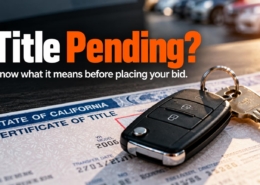
 https://auction.ridesafely.com/images/2026/10/title-pending-car-auction-meaning-guide.jpg
865
1440
RideSafely
/images/2025/01/ridesafely-logo.svg
RideSafely2026-10-27 12:50:482026-10-27 13:20:15What Does Title Pending Mean at a Car Auction?
You found a vehicle, placed your bid, and watched the auction close. Your offer was the highest, but the listing now says “On Approval.”
So, did you win the car?
Not necessarily. At a car auction, the highest bid doesn’t always guarantee a completed purchase.
When a vehicle is listed as On Approval, the seller must accept the final bid before completing the sale.
Understanding this process helps you avoid confusion, manage expectations, and make better decisions when buying vehicles at online auctions.
What Does On Approval Mean in a Car Auction?
The term On Approval means the seller has the final say on whether to accept the highest auction bid.
Unlike an unconditional auction sale, the transaction remains pending until the seller decides.
For example, imagine bidding $7,500 on a used SUV. When bidding closes, your offer is the highest.
However, the seller expected $8,500 and wants to review the result.
Rather than selling the car right away, the auction lists it as On Approval.
The seller can then accept your bid, reject it, or propose another price.
Therefore, being the highest bidder doesn’t automatically make you the vehicle’s owner.
How Does the On Approval Process Work?
The seller approval process usually follows several steps.
1. The Vehicle Goes Up for Auction
First, a seller lists a vehicle through an auction platform.
The vehicle might have a clean title, salvage title, or another title designation.
People interested in the vehicle look over the listing and submit their bids based on the auction’s rules.
2. The Auction Closes
Once bidding ends, the auction identifies the highest offer.
However, the transaction remains pending if the vehicle requires seller approval.
The highest bidder must wait for the seller’s decision.
3. The Seller Reviews the Final Bid
Next, the seller evaluates the highest offer.
The seller might compare that amount with an expected selling price or an internal valuation.
Depending on the auction’s rules, the seller can accept, reject, or counter the offer.
4. The Auction Confirms the Outcome
Finally, the auction platform notifies the buyer of the seller’s decision.
If the seller approves the bid, the buyer must complete the purchase under the applicable terms.
If the seller declines, the vehicle stays unsold to that bidder.
Why Do Sellers Use On Approval at Car Auctions?
Sellers use this option to keep control over their final selling price.
For example, insurance companies, dealerships, lenders, and private sellers might have particular financial expectations.
There are a few different reasons why a seller might choose to accept or reject a bid.
Market value: The seller may believe the vehicle is worth more than the highest bid.
Reserve expectations: The final offer might fall below the seller’s preferred selling price.
Internal requirements: Some sellers need authorization before accepting a particular offer.
Market demand: The seller may consider whether another auction could attract stronger bids.
However, an On Approval status doesn’t automatically indicate a problem with the vehicle.
It simply means the transaction requires an additional decision.
On Approval vs. Reserve Price vs. Pure Sale
These auction terms describe different selling conditions.
Knowing their differences may help you choose which vehicles to bid on.
On Approval
The seller retains the right to accept or reject the final highest bid.
As a result, the auction can close without immediately producing a completed sale.
Reserve Price
A reserve price represents the minimum amount a seller wants to receive.
If bidding doesn’t meet that amount, the seller may still have the option to accept the highest offer.
However, the exact process depends on the auction’s rules.
Pure Sale
A Pure Sale has no reserve price or minimum bid requirement.
Therefore, the highest eligible bidder receives the vehicle when the auction closes, subject to applicable terms.
Unlike an On Approval listing, a Pure Sale doesn’t require a separate seller price approval.
How Long Does Seller Approval Take?
Approval times depend on the auction platform and seller.
At RideSafely, the review procedure usually takes 24 to 48 hours, although some decisions take longer.
Other auction platforms may use different approval deadlines.
Consequently, you should check the particular terms before placing your bid.
While waiting, monitor your account dashboard and email for updates.
Avoid arranging vehicle pickup or making nonrefundable transportation commitments until you receive confirmation.
Most importantly, don’t assume that silence means the seller rejected your offer. You may still receive a counteroffer.
Can a Seller Counteroffer After the Auction?
Yes. Some auctions allow sellers to negotiate after bidding closes.
Suppose your highest bid is $6,000, but the seller wants $6,800.
Instead of rejecting the offer, the seller might submit a counteroffer.
You can then evaluate the proposed price and decide whether to accept it.
However, a counteroffer doesn’t necessarily cancel your original bid.
Auction rules may keep that bid binding during the seller’s approval period.
Therefore, always review your bidding obligations before entering negotiations.
Smart Ways to Bid on On Approval Vehicles
An On Approval listing can still represent a worthwhile buying opportunity.
However, preparation matters more than the auction result alone.
Research the vehicle’s value. Compare similar vehicles using their condition, mileage, title status, and market pricing.
Take a close look at the vehicle’s details. Check out the photos, read through the damage descriptions, review the title information, and see what’s reported about how the car runs.
Set your maximum bid. Include auction fees, transportation, taxes, and estimated repairs when calculating your budget.
Understand the approval timeline. Check how long the seller can hold your offer before deciding.
Prepare for a counteroffer. Decide whether you can justify paying more without exceeding your budget.
Watch for approval. Follow the auction’s instructions before making payments or arranging transportation.
Above all, avoid raising your offer just because the seller asks for more money.
Your original budget should reflect the vehicle’s value and possible risks.
Can You Cancel a Bid While Waiting for Approval?
Generally, you shouldn’t assume that a pending approval allows you to withdraw your bid.
Many vehicle auctions treat submitted bids as binding offers.
If the seller accepts within the permitted period, you may become obligated to purchase the vehicle.
For instance, Copart’s terms generally prohibit retracting submitted bids.
Its rules also keep qualifying On Approval bids open during the designated acceptance period.
Because policies vary, review the auction’s terms before bidding.
Never place an offer unless you’re prepared to complete the transaction if the seller accepts.
Is Buying an On Approval Vehicle Worth It?
Yes, an On Approval vehicle can be worth pursuing when the price and condition meet your needs.
However, the extra approval step introduces uncertainty.
You might submit the highest bid and still leave without purchasing the vehicle.
Alternatively, the seller may accept your offer, allowing you to purchase at your original price.
For that reason, focus on the vehicle’s condition, total cost, and your maximum affordable bid.
Final Thoughts
An On Approval status means the auction has ended, but the seller hasn’t finalized the sale.
Even if your bid is the highest, the seller must still approve it.
Grasping this distinction is able to prevent costly assumptions and unnecessary frustration.
Before bidding, research the vehicle, understand the auction terms, and establish a firm budget.
That way, you’ll be ready for either outcome and better prepared for your next online car auction.
Frequently Asked Questions
What does On Approval mean at a car auction?
“On Approval” means the auction has concluded, but the seller has to accept your bid before the sale is complete. You may be the highest bidder, but the vehicle isn’t yours until the seller approves your offer.
How long does it take for a seller to approve a bid at RideSafely?
At RideSafely, seller approval typically takes 24-48 hours, although in a few instances it can take longer. You can check your account dashboard and email whilst you’re waiting for confirmation.
Can a seller reject the highest bid at a car auction?
Yes. When a vehicle is pending approval, the seller can accept the highest bid, reject it, or make a counteroffer. Winning the bid doesn’t necessarily mean the seller will approve the sale.
Can I cancel my bid whilst I’m waiting for the seller to approve it?
Don’t assume you can cancel a bid whilst it’s pending approval. Many auctions will treat a bid as a binding offer during the approval period. Always check the auction terms before you bid, as you may be obliged to complete the purchase if the seller accepts the bid.
What if the seller makes a counter-offer?
If the seller places a higher bid, you can review it and decide whether to accept it. Your original bid may well remain in force during the approval period depending on the auction rules. Always bear your total cost in mind before you agree to a higher price.
See What’s Up for Auction
 Have a vehicle in mind, or just exploring your options? Browse used, salvage, and repairable vehicles on RideSafely. Review the listings, check the auction terms, and find something worth bidding on.
What People Are Saying

You might also like
https://auction.ridesafely.com/images/2026/10/title-pending-car-auction-meaning-guide.jpg
865
1440
RideSafely
/images/2025/01/ridesafely-logo.svg
RideSafely2026-10-27 12:50:482026-10-27 13:20:15What Does Title Pending Mean at a Car Auction? https://auction.ridesafely.com/images/2026/10/minor-ev-accident-total-loss-banner.jpg
865
1440
RideSafely
/images/2025/01/ridesafely-logo.svg
RideSafely2026-10-20 12:28:512026-10-20 13:08:10Why Minor Accidents Can Total an Electric Vehicle
 https://auction.ridesafely.com/images/2026/10/dealer-only-car-auction-explained-banner.jpg
865
1440
RideSafely
/images/2025/01/ridesafely-logo.svg
RideSafely2026-10-13 13:22:432026-10-13 13:31:05What Does “Dealer Only” Mean at a Car Auction?
 https://auction.ridesafely.com/images/2026/10/actual-vs-not-actual-mileage-banner.jpg
865
1440
RideSafely
/images/2025/01/ridesafely-logo.svg
RideSafely2026-10-06 14:31:302026-10-13 13:22:41Actual Mileage vs Not Actual Mileage at Car Auctions
 https://auction.ridesafely.com/images/2026/09/auction-car-with-no-keys-buyer-guide-banner.jpg
865
1440
RideSafely
/images/2025/01/ridesafely-logo.svg
RideSafely2026-09-29 12:05:282026-10-06 13:50:49Auction Cars With No Keys What to Know Before You Bid
Your RideSafely Questions, Answered
From auction to driveway — we’ve got you covered.